San Gemini Preservation Studies


Fieldwork Projects in the town of San Gemini
Mural Painting Conservation Program
San Gemini, Italy - January 4 to May14, 2027
Field Work
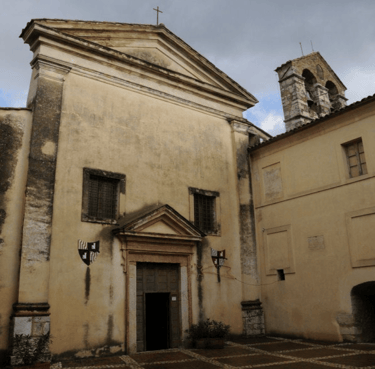
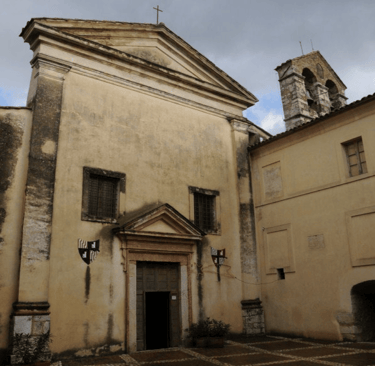
Church of San Giovanni Battista
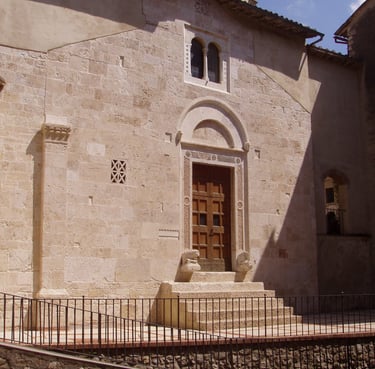
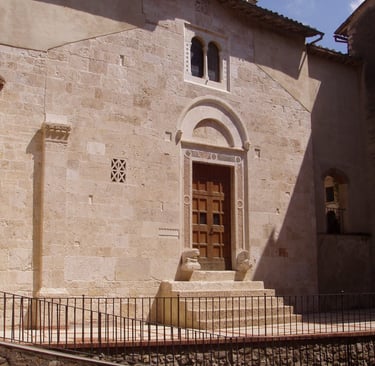
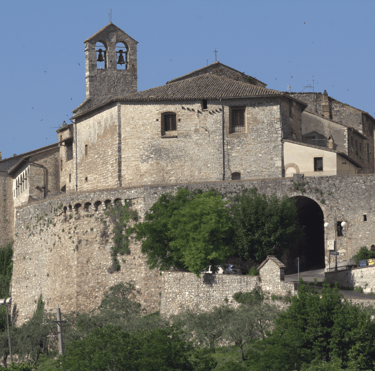
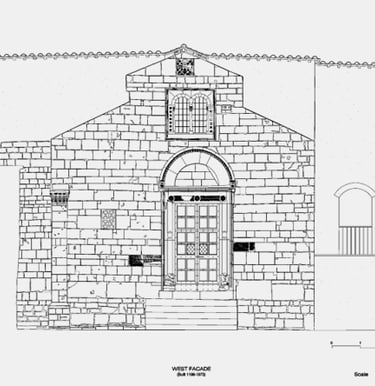
12th Century facade
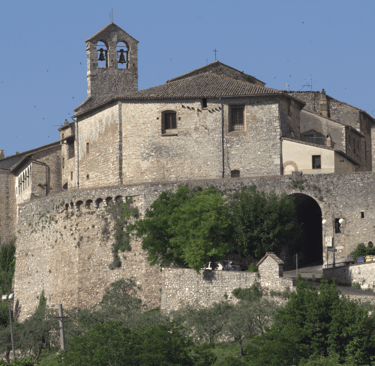
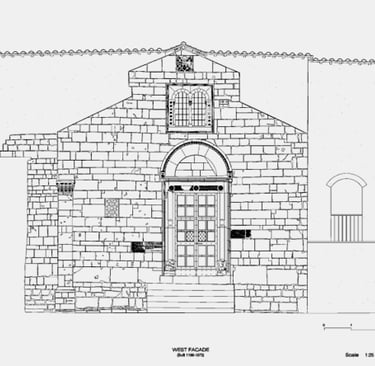
18th Century facade
North side of church
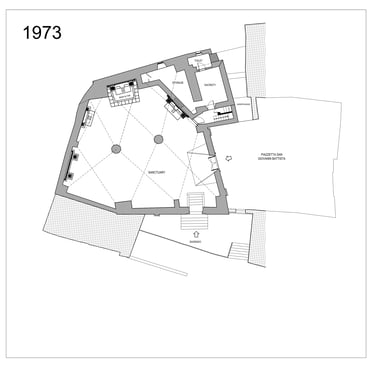
Present plan
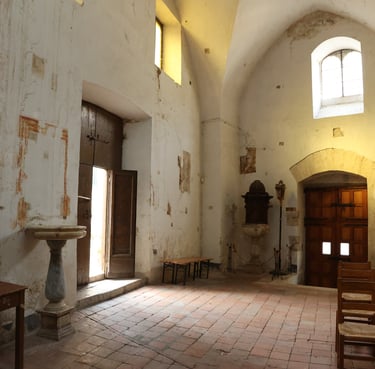
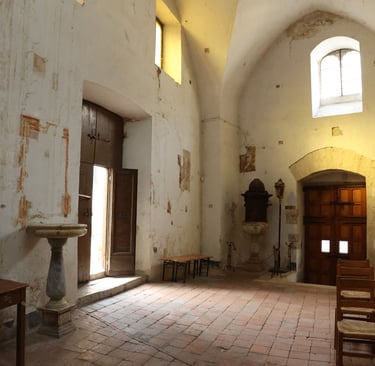
Interior
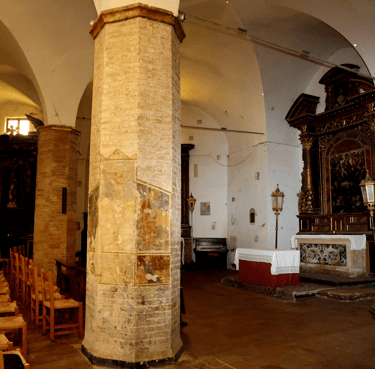
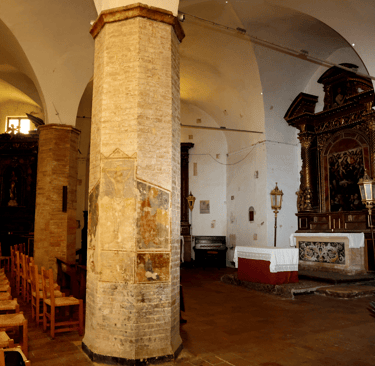
Interior
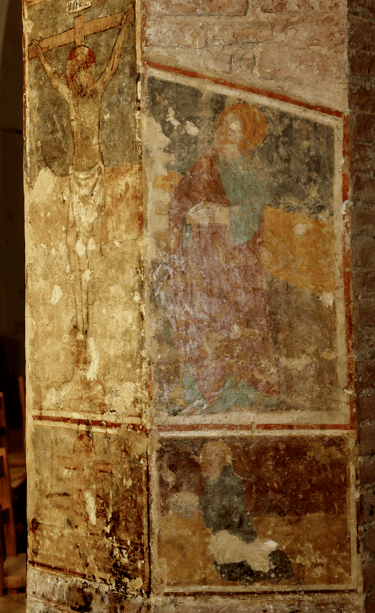
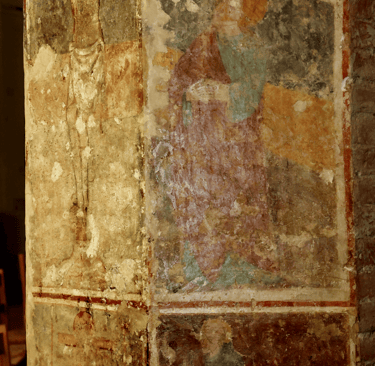
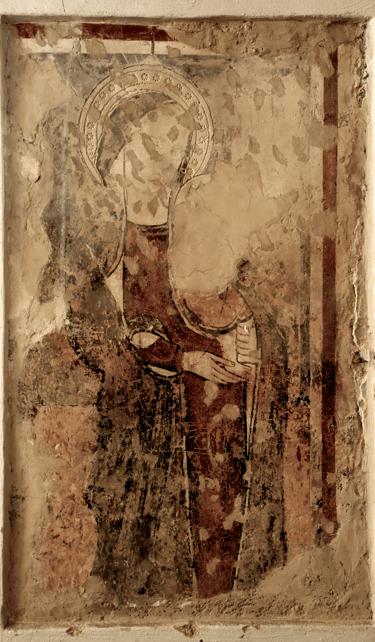
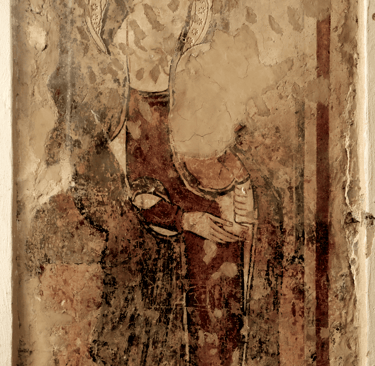
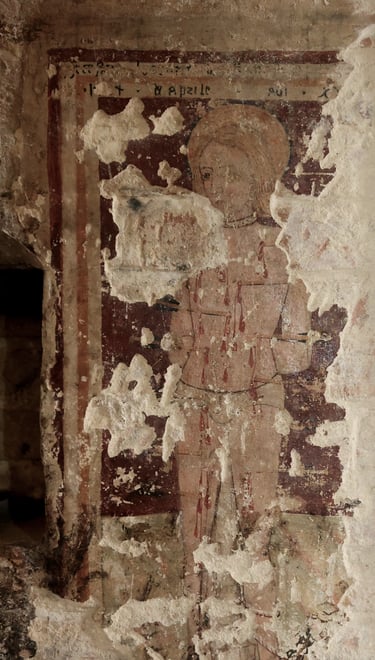
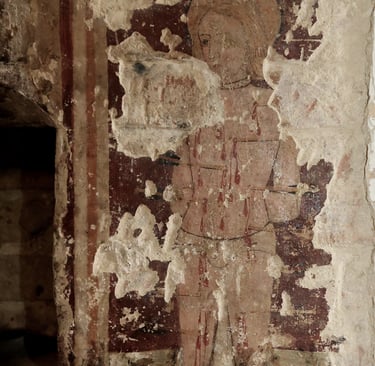
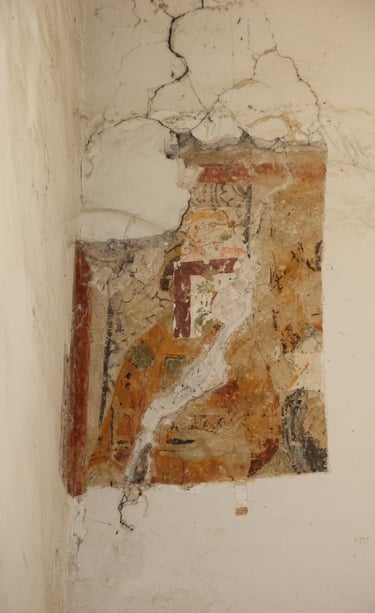
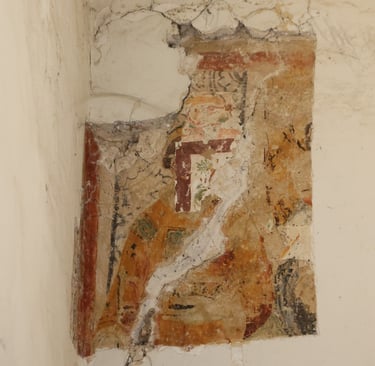
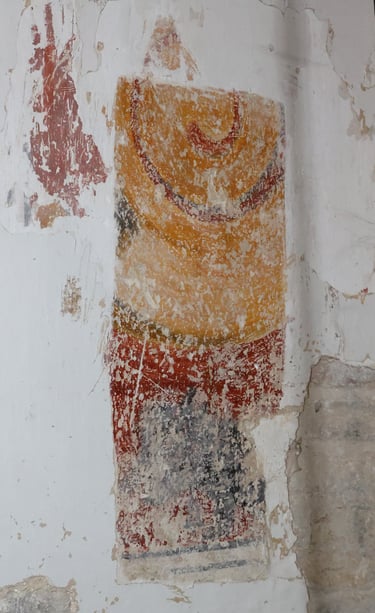
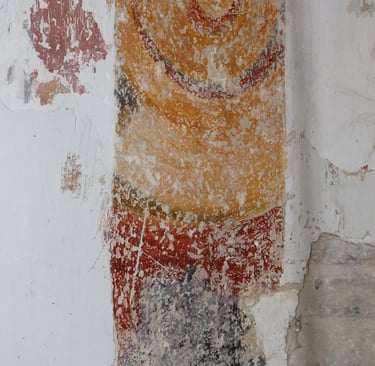
The Church of San Giovanni Battista was first constructed in 1199 AD and has undergone numerous expansions and renovations over the past eight centuries. As a result, its interior preserves mural paintings from several distinct historical periods, reflecting the church’s long and stratified history.
At the beginning of the 20th century, the church interior was entirely whitewashed in an effort to “clean” and visually unify the space. Despite this intervention, physical evidence indicates that the walls were originally fully decorated with mural paintings belonging to different phases of the building’s history.
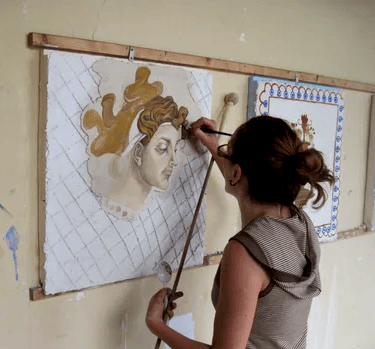
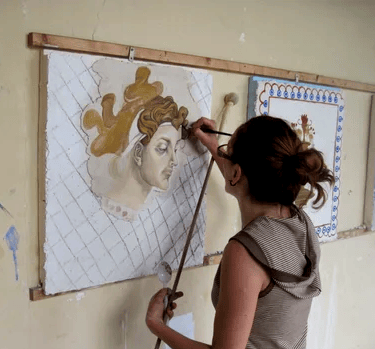
Current fieldwork in the church focuses on two main objectives: the careful removal of the whitewash to reveal the concealed decorative layers, and the conservation and restoration of both the already visible mural paintings and those that will emerge during the uncovering process.
Field Work
Ex Convent of the Maddalena
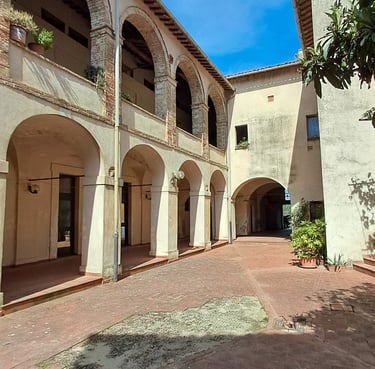
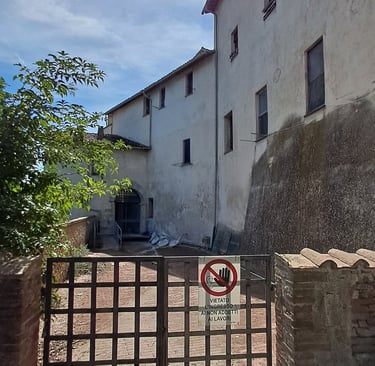
Courtyard
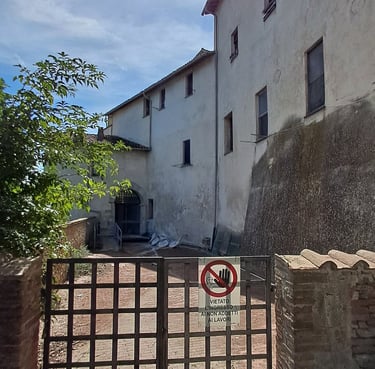
North side
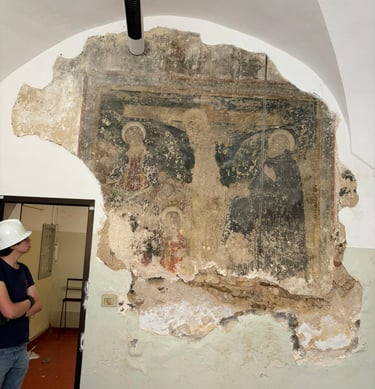
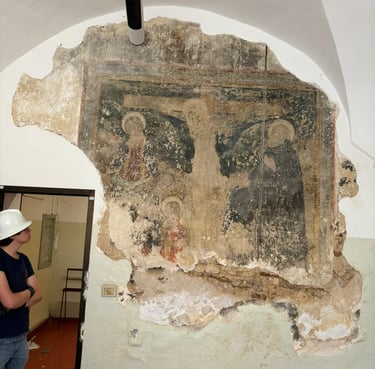
Crucifixion
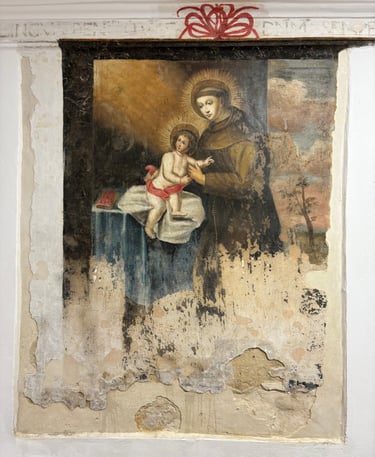
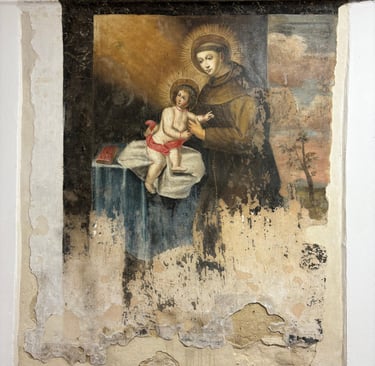
Jesus and St. Anthony of Padua
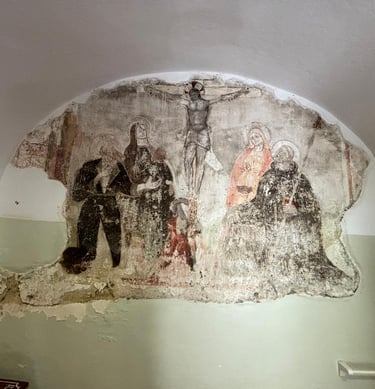
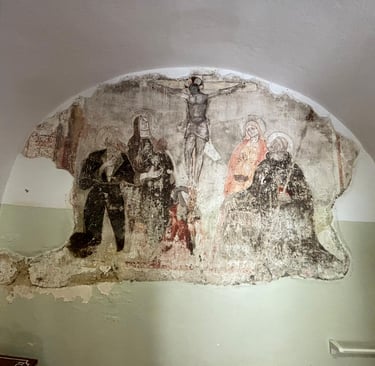
Crucifixion
The Ex Convent of the Maddalena probably originated in the 14th century, occupying previously abandoned defensive structures. In the 17th century, the complex underwent a major phase of expansion and renovation. In recent years, this large building complex has been repurposed for various public uses, including a public library, nursery schools, a national health clinic, community spaces, and public housing.
Within the building, three mural paintings are in very poor condition and are at serious risk of being lost. One, depicting the Madonna with Saint Anthony of Padua, is located in the public library. The other two are frescoes of crucifixion scenes situated in the areas formerly used by the national health clinic.
The fieldwork will first focus on addressing the problem of rising ground humidity, which contributes to spalling caused by the crystallization of salts beneath the wall surface. This will be followed by the conservation and restoration of the pictorial layers of the mural paintings.
Field Work
Palazzo Vecchio
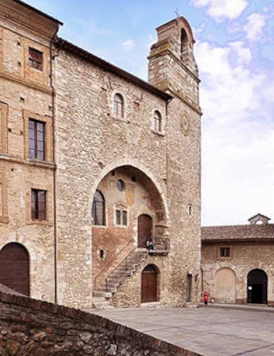
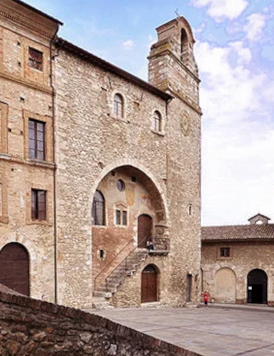
Palazzo Vecchio 13th century
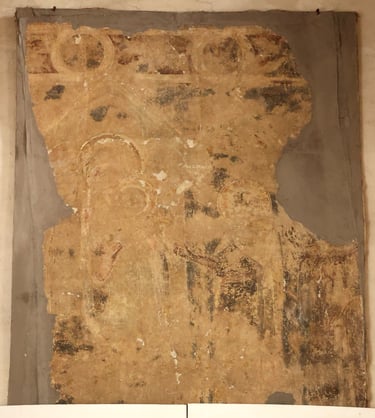
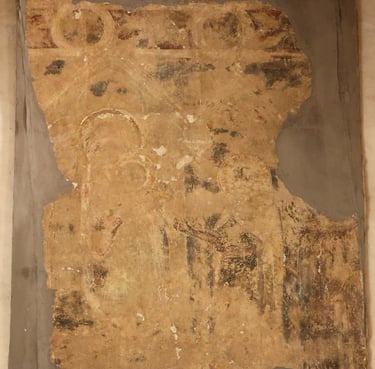
Madonna Child and Saints
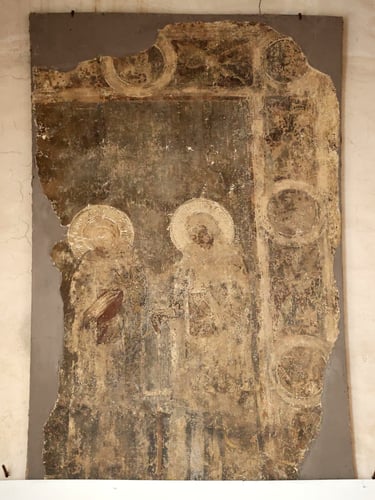
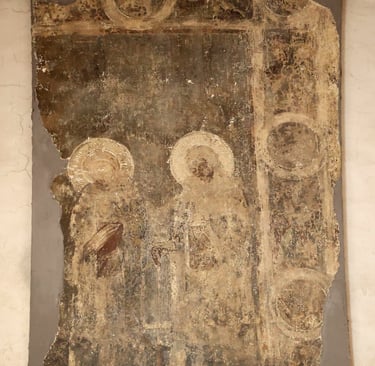
Palazzo Vecchio San Gemini's 13th-century city hall contains two heavily damaged 15th-century frescoes that were detached from their original walls and transferred to canvas supports using the strappo technique. One fresco depicts the Madonna and Child flanked by saints, while the other represents two saints. The paintings are not originally from this building
The strappo method is no longer considered acceptable, as it often caused significant damage during removal, and the flexibility of the canvas support has contributed to ongoing deterioration. The conservation work will involve transferring the paintings to a rigid support—typically a fiberglass panel with an aluminum honeycomb core—to stabilize the frescoes. This will be followed by standard restoration procedures, including cleaning and the visual reintegration of lacunae. your text here...
Two Saints
Collaborations & memberships












U. d.s.d. Tuscia
Contacts
International Institute for Restoration and Preservation Studies LLC (IIRPS)
203 Seventh Ave
Brooklyn, NY 11215 , USA , Tel: 718-768-3508
Phone
pwithers@iirpsemail.org
© 2025. All rights reserved.

Tel: +1 718-768-3508


Programs:
San Gemini Preservation Studies (SGPS)
www.sangeministudies.org
San Gemini Book & Paper Conservation School
https://www.sangemini-bp.org/
SGPS Mural Painting Conservation Program
www.sangeministudies-murals.org
SGPS San Gemini Historic Archives Program
www.sg-archivio.org